
Louisiana ASA Chapter
2026 Chapter Officers
President:
Siyi Chen
Biostatistics Section
LSU Health Science Center New Orleans
2020 Gravier Street, 3rd Floor
New Orleans, LA 70112
sche11@lsuhsc.edu
Vice President:
Tingting Hou
Department of Experimental Statistics
Louisiana State University
Baton Rouge, LA 70803-5606
tingthou@lsu.edu
Secretary/Treasurer:
James Calvin Berry
Mathematics Department
University of Louisiana at Lafayette
Box 43568
Lafayette, LA 70504-3568
cberry@louisiana.edu
Chapter Representative:
Kalimuthu Krishnamoorthy
Mathematics Department
University of Louisiana at Lafayette
Box 43568
Lafayette, LA 70504-3568
krishna@louisiana.edu
If you have any suggestions regarding the chapter such as: proposals for activities, potential speakers, or the like, please send them to the president.
Spring 2026 Meeting
- Friday 10 April 2026
- LSU AgCenter
- Efferson Hall room 212
- 4189 Highland Road
- Baton Rouge, Louisiana
The Spring 2026 meeting of the Louisiana ASA chapter was held Friday 10 April 2026 on the LSU campus in Baton Rouge, Louisiana.
The Keynote speaker was Hyeongseon Jeon from the Department of Mathematics at the University of Houston. He will presented two talks.
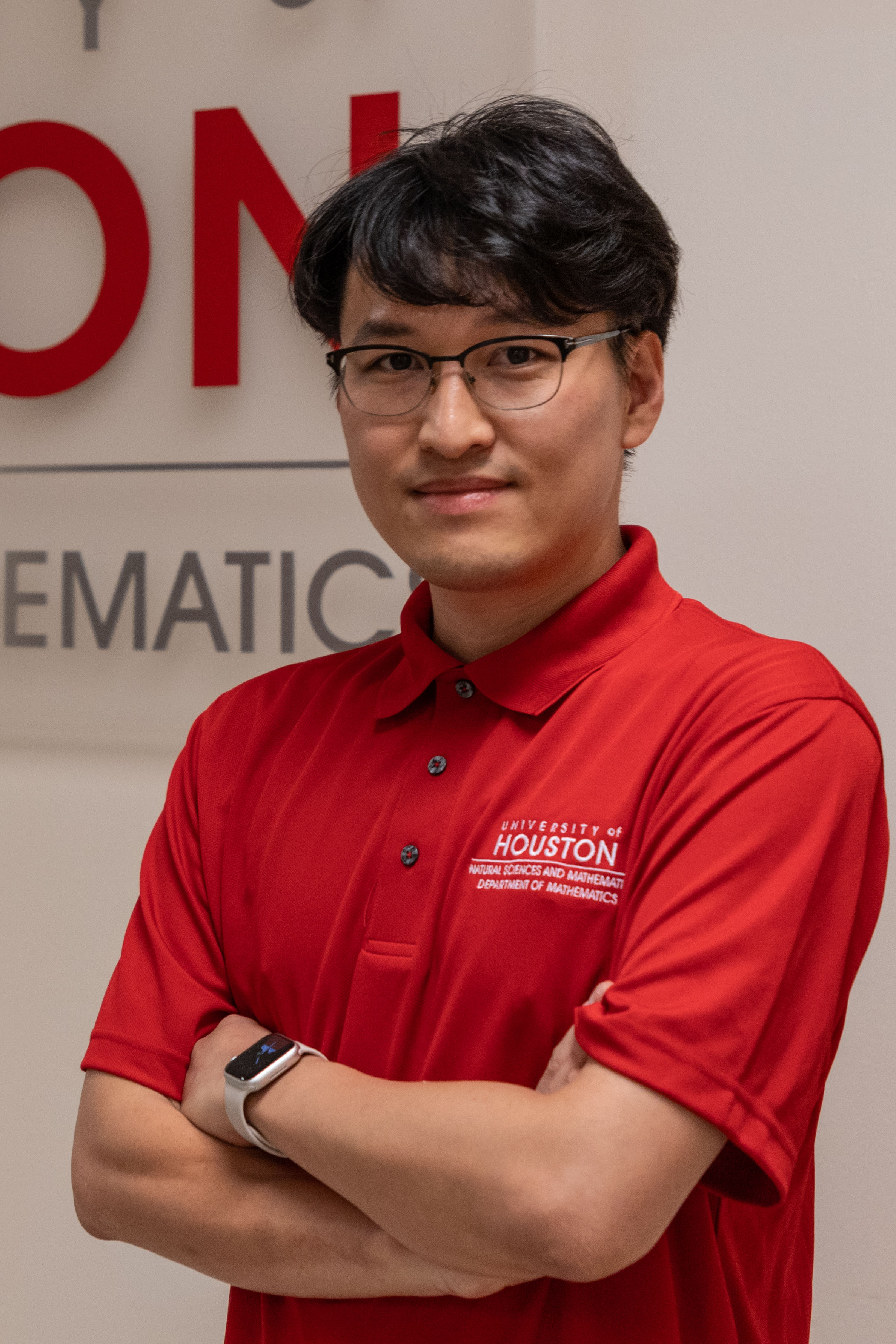
Keynote address 1: RNA-seq Analysis with Gene-Specific Covariates
Abstract: In this presentation, I will introduce a novel positive false discovery rate (pFDR) controlling method for testing gene-specific hypotheses using a gene-specific covariate variable, such as gene length. We suppose the null probability depends on the covariate variable. In this context, we propose a rejection rule that accounts for heterogeneity among tests by using two distinct types of null probabilities. We establish a pFDR estimator for a given rejection rule by following Storey’s q-value framework. A condition on a type I error posterior probability is provided that equivalently characterizes our rejection rule. We also present a procedure for selecting a tuning parameter through cross-validation that maximizes the expected number of hypotheses declared significant. Simulation studies demonstrate that our method is comparable to or better than existing methods across realistic scenarios. In data analysis, we find support for our method’s premise that the null probability varies with a gene-specific covariate variable.
Keynote address 2: A Overview of Hyeongseon Jeon’s Methodological and Team Science Research
Professor Jeon is excited at the prospect of sharing his work and engaging in a lively interaction with all of the meeting attendees! Please do your best to join us if you can.
Schedule
| Time | Title and Speaker |
|---|---|
| 9:30-10:00 | Reception |
| 10:00-10:45 |
Keynote Address 1: RNA-seq Analysis with Gene-Specific Covariates Hyeongseon Jeon, University of Houston, Houston |
| 10:45-11:00 | Discussion |
| 11:00-11:20 |
CAFT: A Compositional Log-Linear Model for Microbiome Data with Zero Cells Mo Li, University of Louisiana at Lafayette, Lafayette |
| 11:20-11:40 |
The h-index deconstructed: Removing citations and a citation-standardized h-index Lawrence Smolinsky, Louisiana State University, Baton Rouge |
| 11:40-1:00 | Lunch |
| 1:00-1:30 |
Keynote Address 2: A Overview of Hyeongseon Jeon’s Methodological and Team Science Research Hyeongseon Jeon, University of Houston, Houston |
| 1:30-1:40 | Discussion |
| 1:40-2:00 |
Non-Homogeneous Continuous-time Markov Chain (NH-CTMC): Estimations and Challenges Joonha Chang, Louisiana State University Health Sciences Center, New Orleans |
| 2:00-2:20 |
Sub-constructs for the Arithmetic Mean: Interrelated Sequences and Transitions Edward Yalley, Louisiana State University, Baton Rouge |
| 2:20-2:40 |
Sample Size Calculation and Power Analysis for the General Mediation Analysis Method Nubaira Rizvi, Louisiana State University Health Sciences Center, New Orleans |
| 2:40-3:00 | Break |
| 3:00-3:20 |
A Unified Framework for Imputing and Forecasting Coastal Land-Area Time Series from Landsat Basant Awasthi, Louisiana State University, Baton Rouge |
| 3:20-3:40 |
Multiple Change-Point Detection and Estimation in Cross-Sectional Time Series Chhabi L Siwakoti, University of Louisiana at Lafayette, Lafayette |
| 3:40-4:00 |
Forecasting Coastal Hypoxia Using a Blend of Mechanistic and Artificial Intelligence Models Yanda Ou, Louisiana State University, Baton Rouge |
| 4:00-4:10 | Brief Chapter Meeting |
Contributed Talk Titles and Abstracts
-
Sub-constructs for the Arithmetic Mean: Interrelated Sequences and Transitions
Edward Yalley
Lutrill & Pearl Payne School of Education
Louisiana State University
Abstract: This is a preliminary report on the initial design phase of a research study examining the integration of artificial intelligence (AI) in stochastic teaching and learning. Grounded in learning trajectory theory ( Simon, 1995) and informed by earlier research in statistics education (Davis & Pitkethly 1990, Pollatsek, Lima & Well, 1981), a hypothetical learning trajectory focused on the arithmetic mean was developed to address persistent conceptual difficulties linked with this statistical concept. The trajectory is characterized by key constructs and sub-constructs of the mean and their developmental relationships, which were embedded within a broader conceptual framework. Guided by this trajectory, instructional sequences were designed for a six-week freshman-level undergraduate course at a public university in Louisiana as part of a planned design experiment. The developmental connections among sub-constructs are intended to support deeper conceptual understanding of the arithmetic mean and to mitigate common misconceptions, such as representativeness and illusion of linearity. This work contributes to a research-based instructional design framework that informs the use of AI-supported instruction in statistics education. -
Non-Homogeneous Continuous-time Markov Chain (NH-CTMC): Estimations and Challenges
Joonha Chang
Department of Biostatistics and Data Science
Louisiana State University Health Sciences Center, New Orleans
Abstract: Non-homogeneous continuous-time Markov chains (NH-CTMCs) offer a highly flexible framework for modeling longitudinal processes, yet they remain understudied due to severe computational bottlenecks. The primary challenge lies in transition probability estimation, which directly complicates parameter estimation via maximum likelihood estimation (MLE). While various numerical and analytical approaches have been proposed to evaluate the transition matrix such as Uniform Accelerated (UA) Expansion, product integrals, the Peano-Baker series, and the Magnus expansion, robust and computationally efficient solutions remain elusive for general state spaces. In this talk, we address these challenges by presenting newly derived, well-approximated closed-form transition probabilities specifically for 2-state and 3-state NH-CTMCs utilizing log-logistic transition rates. We will demonstrate how these closed-form solutions effectively bypass traditional computational hurdles to facilitate efficient MLE. Furthermore, we will contextualize this contribution within the broader landscape of NH-CTMC research, discussing the inherent mathematical difficulties in scaling these models. Finally, we will outline critical future directions for the field, highlighting the pressing need for developing superior approximation techniques for product integrals and the Peano-Baker series to advance the broader application of NH-CTMCs. -
Forecasting Coastal Hypoxia Using a Blend of Mechanistic and Artificial Intelligence Models
Yanda Ou
Department of Oceanography and Coastal Sciences
and Center for Computation and Technology
Louisiana State University
Abstract: Daily fluctuations in coastal hypoxia pose significant threats to marine ecosystems, yet accurate and timely forecasting remains a challenge. Statistical models offer computational efficiency but often sacrifice predictive performance, while mechanistic models achieve high accuracy at considerable computational cost. To bridge this gap, we present a lightweight artificial intelligence (AI) model for daily hypoxia forecasting on the Louisiana–Texas shelf, trained and validated against a 14-year mechanistic ROMS hindcast. The model integrates observed riverine nutrient loads with 2-day hydrodynamic forecasts, achieving strong predictive performance: median accuracy of 0.85 ± 0.07 and F1 score of 0.72 ± 0.18 against the hindcast test set, and accuracy of 0.67 ± 0.10 with F1 score of 0.62 ± 0.14 against shelf-wide cruise observations. Robustness is further demonstrated when the model is applied to independent hydrodynamic forecasts (accuracy = 0.71 ± 0.09; F1 score = 0.64 ± 0.17). Beyond real-time forecasting, the model enables rapid scenario testing for coastal management applications. Nutrient reduction assessments indicate that reductions exceeding 90% may be necessary to meet Gulf Hypoxia Task Force goals. Ablation experiments reveal water column stratification as the dominant predictor of daily hypoxia events. Together, these results highlight the potential of AI-driven approaches to advance real-time water quality forecasting, support evidence-based management decisions, and inform adaptive cruise planning in dynamic coastal environments -
Multiple Change-Point Detection and Estimation in Cross-Sectional Time Series
Chhabi L Siwakoti
Department of Mathematics
University of Louisiana at Lafayette
Abstract: In longitudinal data settings, particularly longer time periods of repeated measures, multiple changepoints detection is often of interest. Because multiple changepoints imply a varying number of model parameters, creating a challenging optimization problem. To address this problem, we propose a genetic algorithm-based heuristic search approach that can jointly estimate the number of changepoints, their locations, and the corresponding model parameters, with model selection guided by the Bayesian Information Criterion (BIC). This unified approach accounts for the interdependence among these quantities and avoids error propagation associated with stepwise estimation. Simulation results indicate that the proposed method outperforms the existing approach. Its practical applicability is illustrated through an analysis of one cohort of heifer weight data from the Cottonwood data station in South Dakota. -
The h-index deconstructed: Removing citations and a citation-standardized h-index
Lawrence Smolinsky
Department of Mathematics
Louisiana State University
Abstract: Bibliometric measures are essential in both information science and social science. These measures provide insights into the influence and reach of research, helping to shape the evaluation of scholarly work. An elegant numerical indicator, the h-index, was introduced by J.E. Hirsh, and now stands alongside the total citation count. It exhibits strong positive correlations with an author's total citations (n) and the number of published articles. However, total citations also correlate with the number of articles. Is there information in the h-index beyond citation count, and how can it be accessed? We decompose the h-index into a mixture of probability distributions: the overall distribution of total citations and the conditional distributions of citation allocations given n. We standardize the allocations for each n to create the standardized h-index. The standardized h-index distribution will retain the information from the h-index after removing total citation information. We then turn to examine the standardized h-index on three data sets. This work is joint with Seungwon Yang. -
CAFT: A Compositional Log-Linear Model for Microbiome Data with Zero Cells
Mo Li
Mathematics Department
University of Louisiana at Lafayette
Abstract: Differential abundance analysis is fundamental in microbiome research. However, microbiome data are compositional, highly sparse (with many zeros), and often affected by differential experimental bias across taxa, making valid inference difficult. Standard methods frequently rely on relative abundances or pseudocounts, which can introduce spurious associations and undermine false discovery rate (FDR) control. We propose the Compositional Accelerated Failure Time (CAFT) model, a new framework that treats zero counts as censored observations below a detection limit and therefore avoids pseudocounts. CAFT is inherently robust to multiplicative technical bias and addresses compositional effects through properly constructed score tests. Simulations show that CAFT improves type I error and FDR control relative to competing compositional methods while maintaining strong power, with or without technical bias. Applications to real microbiome datasets further illustrate its utility. CAFT provides a robust, efficient, and powerful approach for compositional differential abundance analysis. -
A Unified Framework for Imputing and Forecasting Coastal Land-Area Time Series from Landsat
Basant Awasthi
Department of Geography and Anthropology
Louisiana State University
Abstract:Coastal wetlands provide vital ecosystem services, including storm-surge attenuation, flood regulation, and carbon sequestration. However, they are increasingly threatened by global degradation driven by sea-level rise and human activities. Effective management depends on accurate monitoring, yet satellite imagery in humid coastal areas often faces challenges, such as persistent cloud cover, resulting in incomplete and irregular data. This research introduces an integrated computational framework to reconstruct and forecast monthly land-area changes over four decades (1984-2024) across four distinct coastal Louisiana regions: the lower Mississippi River Delta (MRD), the Atchafalaya River Basin, Vermilion Bay, and Rockefeller Wildlife Refuge. We derived monthly land-area time series from the Landsat archive using a Random Forest classification approach to maintain consistent results across different Landsat sensors. To handle missing data caused by heavy cloud cover, we compared Kalman-based structural state-space modeling with Gaussian Process Regression (GPR). Cross-validation results showed that the Kalman Filter reduced reconstruction errors by up to 36% compared with GPR, which often reverted to the global mean and suppressed phenological variability during long gaps. We then evaluated seven forecasting methods, including Naïve, ARIMA, Prophet, Neural Network Autoregression (Auto-NN), Tuned NN, XGBoost, and Ensemble to project future land-area trends. The Auto-NN method consistently outperformed traditional statistical models, particularly in the non-stationary Chenier Plain (Rockefeller Wildlife Refuge), where it reduced forecast errors by more than 50% by capturing structural breaks driven by episodic disturbances. We generated short-term (5-year) operational forecasts and exploratory long-term (10-year) forecasts with quantified uncertainty, highlighting notable differences in predictability among sites. Results suggest different coastal futures: the Atchafalaya Basin continues to expand, Vermilion Bay gradually loses land, the lower MRD has highly variable changes, and Rockefeller presents a more complex pattern with marked short-term fluctuations, with uncertainty bounds widening significantly over the decade. This framework provides a scalable approach to reconstruct incomplete satellite data, enabling reliable long-term monitoring in coastal regions with limited data. This work is joint with Xuelian Meng, Manisha K C, Thanos Gentimis -
Sample Size Calculation and Power Analysis for the General Mediation Analysis Method
Nubaira Rizvi
Department of Biostatistics and Data Science
Louisiana State University Health Sciences Center, New Orleans
Abstract:Mediation analysis is vital for identifying causal mechanisms in biomedical research. However, accurate power estimation for complex designs involving non-normal or time-to-event outcomes remains computationally challenging, often forcing reliance on slow simulations. We propose a computationally efficient hybrid approach for general mediation analysis using shape constrained additive models (SCAM). By applying monotone smoothing splines to estimate empirical critical values derived from extensive simulations, our method enforces theoretical consistency (e.g., non-increasing critical values with sample size) and enables accurate power calculation without the need for real-time resampling. Validation across varying scenarios, including continuous, binary and time-to-event models, demonstrated strict Type I error control. This study presents a robust framework that combines the flexibility of simulation-based inference with the speed of analytical approximations. We provide an accompanying R package to facilitate efficient sample size planning for complex mediation models.